
11 min read · Distributor guide
Self-Fitting vs. Preset OTC Hearing Aids: What the Evidence Says — and Which to Source
OTC hearing aids come in two regulatory flavors — preset and self-fitting — and the difference decides your compliance burden, your price floor, and how buyers set the device up. This guide lays out what the FDA actually distinguishes, what the clinical evidence shows, and how a distributor or private-label brand should choose.
By Daerdo OEM Team · July 25, 2026
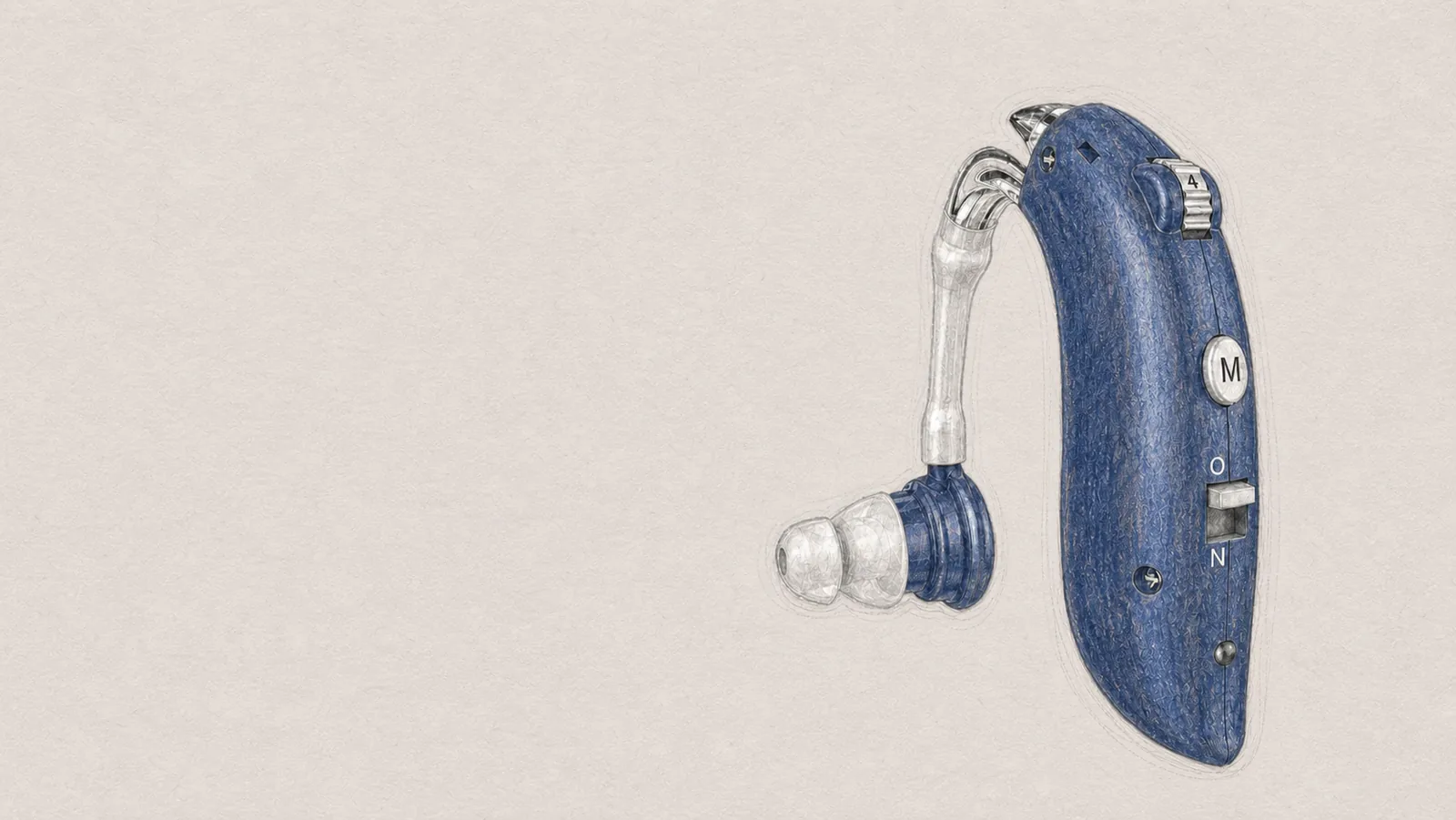
When the FDA opened the over-the-counter (OTC) hearing aid category in 2022, it did not create one product — it created two. Every OTC device is either preset or self-fitting, and that single distinction quietly decides three things a distributor cares about: how much regulatory work the device carries, how low its price can go, and how the end buyer sets it up on day one.
This is not academic. The two classes sit under different FDA requirements, land at different price floors, and shift the support burden in opposite directions. Below: what the FDA actually distinguishes, what the clinical evidence says about whether self-fitting works, and a practical framework for which one to source — every claim tied to a checkable source.
The two classes, side by side
Both are sold without a prescription or a professional fitting, to adults 18 and older with perceived mild-to-moderate hearing loss. The difference is how the device arrives at the right settings for a given ear.
| Preset | Self-fitting | |
|---|---|---|
| How it is set up | A handful of fixed programs for broad loss levels | An app-guided hearing check tunes it to the user |
| Personalization | Averaged — not matched to an audiogram | Frequency-dependent, user-derived settings |
| Companion app | Optional or none | Required |
| FDA pathway | 510(k)-exempt | Own 510(k) clearance + clinical data |
| Typical price, per pair | From about $100 | Generally from about $500 |
| Best fit | Simple, price-sensitive, fast to market | Premium, personalization-led positioning |
One caveat up front: preset does not always mean cheap, and self-fitting does not always mean expensive — brand classifications and prices overlap, and even differ between sources. Treat the table as the typical case, not a hard rule.
What the FDA actually distinguishes
The OTC hearing aid final rule took effect on October 17, 2022, creating a category for adults with perceived mild-to-moderate hearing loss. Within it, the FDA drew a specific line between the two classes.
In the FDA's own words: a hearing aid outputting a preset "likely would not be self-fitting," but a hearing aid that lets the user make frequency-dependent modifications "would be a self-fitting hearing aid."
That line carries real regulatory weight. Self-fitting OTC hearing aids must obtain their own FDA 510(k) clearance, backed by clinical data validating the self-fitting strategy (21 CFR 874.3325, product code QUH). Preset and other non-self-fitting OTC devices are 510(k)-exempt — they still must meet the OTC controls in 21 CFR 800.30, but skip premarket review. And the FDA does not require OTC hearing aids to be self-fitting: preset is a fully compliant category.
The self-fitting path is newer than most people think. The first self-fitting hearing aid the FDA authorized was the Bose Hearing Aid, cleared via the De Novo pathway on October 5, 2018 — the first device users could fit, program and control themselves without a provider. Others followed: Jabra Enhance Plus (2022) and Sony's CRE-C10 and CRE-E10 (built with WS Audiology). In September 2024 the FDA authorized Apple's AirPods Pro "Hearing Aid Feature" as the first over-the-counter hearing aid software.
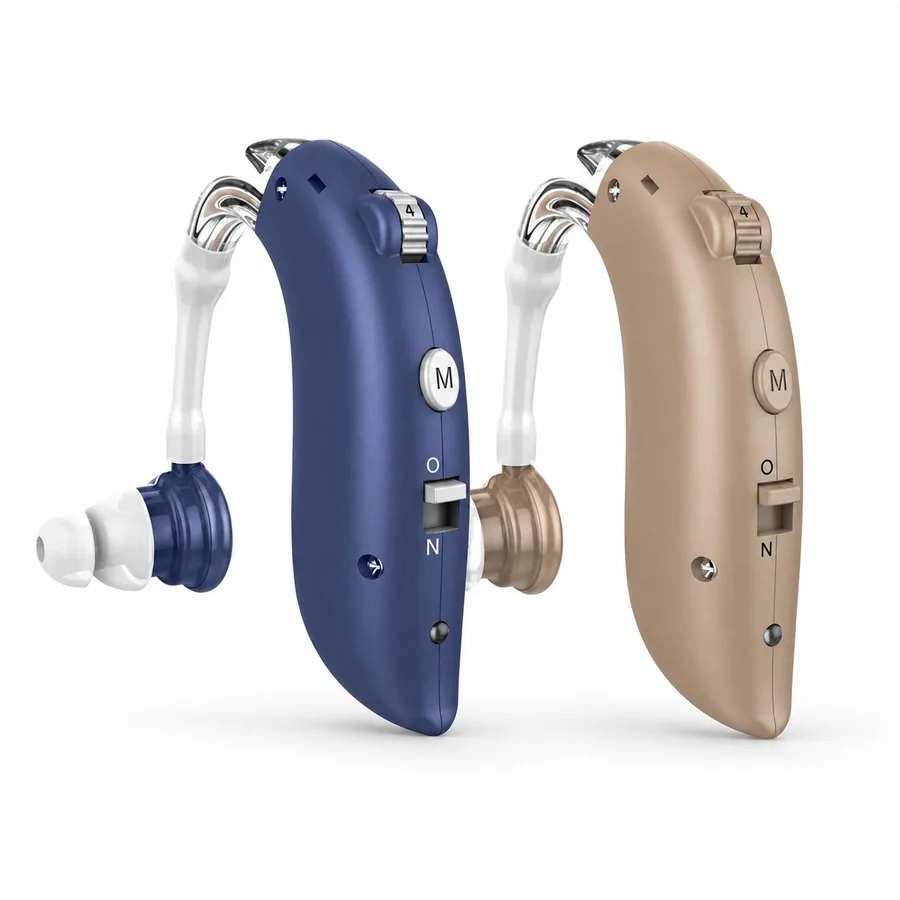
Does self-fitting actually work as well as a professional fitting?
This is the question that decides whether the extra cost and complexity of self-fitting earns its place — and the published evidence is unusually consistent. For mild-to-moderate loss, self-fitting OTC devices tend to perform on par with audiologist-fit ones.
A 2025 multisite randomized trial found two self-fitting methods statistically noninferior to a best-practices audiologist fitting.
Source: Humes et al., Journal of Speech, Language, and Hearing Research (2025)
That trial is not an outlier. A 2023 randomized trial (n = 64) found six-week outcomes comparable between self-fit and audiologist-fit devices, and a 2024 follow-up showed the parity held at roughly eight months. Field work from the National Acoustic Laboratories (2018) found no significant speech-recognition difference, and a 2025 systematic review across 15 studies reached the same conclusion. Controlled trials also show that letting users self-adjust tends to produce equal or higher satisfaction and daily use, not worse.
The honest limit: there is no verified statistic showing self-fitting lowers return rates by any specific amount. The trials measure hearing outcomes and satisfaction, not returns. Personalization plausibly helps the amplification side of returns — but do not let a supplier sell you a self-fitting device on a return-reduction number, because none is published.
How the choice maps to your return rate
Returns are the margin killer in OTC hearing aids — the category runs a 15–30% return rate, against roughly 6–10% for prescription (for the full breakdown, see our guide to reducing OTC returns). The two dominant causes are physical fit and amplification, and the two classes attack them differently.
Typical OTC hearing aid return rate — roughly two to four times the prescription range.
Source: Hearing Insider, citing Wall Street Journal research
In Eargo's own OTC and direct-to-consumer disclosures, unsatisfactory fit is the most commonly cited reason for return — a physical problem no app can solve. Self-fitting targets the amplification side by tuning to the user; a well-built preset targets the fit side with multiple ear-tip sizes, a comfortable shell, and clear onboarding. The lever that actually moves returns is not the label on the box — it is whether the device solves fit and amplification for the buyer you sell to.
Which should you source?
Scroll horizontally to view the full diagram.
From a sourcing desk, the decision comes down to a few concrete tradeoffs:
| Lens | Preset | Self-fitting |
|---|---|---|
| FDA pathway | 510(k)-exempt — fastest to market | Own 510(k) plus clinical validation |
| Upfront cost and time | Lower | Higher — clinical data and software verification |
| App or software | Not required | Required, with ongoing maintenance |
| Support load | Lighter | Heavier — app install, pairing, fitting flow |
| Price floor | Reaches entry price points | Structurally higher |
| Evidence edge | Proven adequate for many users | Strong parity plus personalization data |
For most distributors and private-label brands entering OTC, preset is the pragmatic starting point — lower regulatory burden, faster to shelf, and a price floor that works in value-driven and emerging markets. Self-fitting is a bigger commitment: a 510(k) with clinical data, a maintained app, and a heavier support flow — but it buys an evidence-backed, premium personalization story for buyers who will actually use it. Neither is better in the abstract; the right answer matches your buyer, your market's price sensitivity, and how much regulatory and software work you are prepared to carry.
Bottom line
- Preset — 510(k)-exempt, from about $100 per pair, no app required. Simplest to source; best for price-sensitive and first-time buyers.
- Self-fitting — own 510(k) plus app and clinical data, from about $500 per pair. Evidence-backed personalization for premium positioning.
- The clinical evidence says self-fitting performs on par with professional fitting — but no published number says it lowers returns.
- Returns are driven by fit and amplification. The winning device solves both, whichever class it belongs to.
Sourcing tip: whichever class you choose, test fit and amplification on a real sample before you commit to volume. The return rate is decided at the product level — long before support gets the email.
Source with Daerdo
Test fit and feedback on a real device — sample from a single unit.
OTC hearing-device platforms for distributors and private-label brands, built at an FDA-registered facility. Verify the return-reducers in this guide on an actual sample before you commit volume.
Sources
- FDA — Establishing Over-the-Counter Hearing Aids (Final Rule, Federal Register 2022-17230)
- FDA — Allows Marketing of First Self-Fitting Hearing Aid Controlled by the User (Bose, 2018)
- FDA — Authorizes First Over-the-Counter Hearing Aid Software (Apple, 2024)
- 21 CFR 874.3325 — Self-fitting air-conduction hearing aid (Cornell Law / eCFR)
- 21 CFR 800.30 — OTC hearing aid controls (eCFR)
- DLA Piper — FDA Finalizes OTC Hearing Aid Rule (regulatory analysis)
- AAO-HNS — Summary of the FDA OTC Hearing Aids Final Rule
- Consumer Reports — A Complete Guide to Over-the-Counter Hearing Aids
- NCOA — The Best Over-the-Counter (OTC) Hearing Aids
- Humes et al. (2025) — Self-fitting noninferiority RCT, J. Speech, Language, and Hearing Research
- De Sousa et al. (2023) — Self-fitting vs audiologist-fit RCT, JAMA Otolaryngology–Head & Neck Surgery
- De Sousa et al. (2024) — Long-term follow-up (PMC11240231)
- Keidser & Convery (2018) — Self-fitting field study, Trends in Hearing
- Hearing Insider — OTC Hearing Aid Return Rates
- Eargo, Inc. — Form 10-K, SEC EDGAR (return-rate disclosures)