
8 min read · Distributor guide
TV Streamers and Bluetooth Transmitters: The Hearing Aid Accessory Line Distributors Skip
Over 39% of hearing aid owners still can't follow the TV, and the prescription channel's fix costs $250 and locks them to one brand. The generic-transmitter alternative works — if you sourced for one codec detail almost no spec sheet mentions.
By Daerdo OEM Team · August 12, 2026
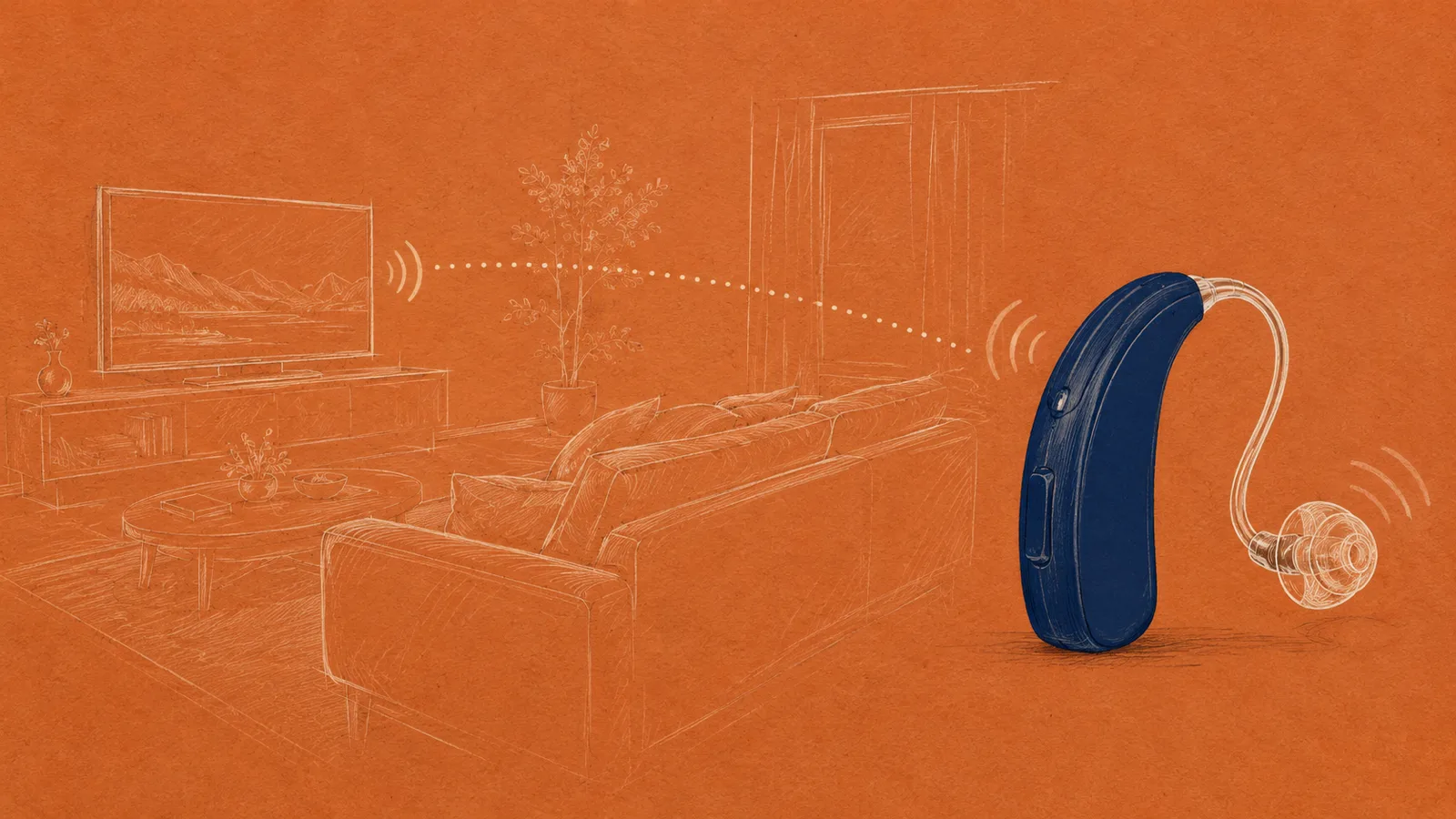
The most persistent complaint from hearing aid owners is not fit, feedback or batteries. It is the television. In a 2018 survey of hearing aid owners, more than 39% still reported problems following TV sound — after being fitted with hearing aids. Meanwhile the accessory that solves this in the prescription world is a proprietary TV streamer that retails around $249.99 — more than six times the wholesale price of an entry-level Bluetooth OTC device. That gap between the size of the problem and the price of the solution is a distributor opportunity hiding in plain sight.
This guide covers why TV listening defeats hearing aids that otherwise work fine, the three ways TV audio can reach an OTC device, the codec detail that decides whether a cheap transmitter works or produces an unwatchable echo, and how to turn all of it into an accessory line instead of a support burden.
Why the TV defeats a working hearing aid
A hearing aid amplifies what arrives at its microphones. At normal viewing distance, what arrives is not the TV — it is the room: the direct sound diluted by metres of air, wrapped in reflections off walls and furniture, and mixed with everyone else in it. Amplifying that mixture louder does not make speech clearer, which is why the classic household compromise — turning the volume up until the rest of the family objects — fails both sides. The fix is not more gain. It is skipping the room entirely and delivering the audio from the source straight into the ear.
Hearing aid owners who still reported difficulty with TV listening — the most frequent listening problem in the survey — despite wearing their aids.
Source: PLOS ONE 2018 — TV listening and hearing aids (n=515)
The three ways TV audio reaches a hearing aid
| Path | How it works | The catch |
|---|---|---|
| Proprietary TV streamer | Brand-specific box plugs into the TV, streams on a private protocol to that brand's aids only | Locked to one brand, retails around $250 — often more than an OTC device itself |
| Generic Bluetooth transmitter | Standard transmitter pairs with any Bluetooth audio device, including BT-capable OTC aids | Only works well when transmitter and aid share a low-latency codec — see below |
| Auracast broadcast (Bluetooth LE Audio) | The TV broadcasts one stream; any number of Auracast receivers tune in like joining Wi-Fi | Needs LE Audio support on both TV and device; rolling out through 2024–2026 |
The middle row is where OTC distributors live today, and it hinges on one number: latency. Standard Bluetooth transmission over the basic SBC codec delays audio by roughly 200 ms — and viewers start noticing lip-sync error at around 45 ms. A low-latency codec such as aptX Low Latency brings the delay down to 32–40 ms, below the perception threshold. But codecs only work when both ends support the same one: a low-latency transmitter feeding an SBC-only hearing aid still runs at SBC speed.
This is the trap behind a familiar one-star review: a customer buys a well-reviewed $40 transmitter, pairs it with their Bluetooth hearing aids, and gets TV audio arriving a fifth of a second late — unwatchable. Nothing is defective. The two devices simply do not share a fast codec, and nothing on either box said so.
What our own catalog says about the spec-sheet gap
Across our 64-model catalog, 7 models are Bluetooth-capable — 4 BTE/CIC platforms and 3 TWS-style devices, wholesaling from $14.8 to $41.4. Here is the uncomfortable first-party observation: the factory spec sheets behind those models list Bluetooth capability, but most do not state which audio profiles and codecs the chipset actually supports — ours included, until we asked. If we have to ask, so do you. Whether a device can receive TV audio through a generic transmitter, and at what latency, is precisely the information that never makes it onto the one-page spec.
- Ask which Bluetooth profiles the device supports, by name. Call audio (hands-free) and media streaming (A2DP or LE Audio) are different capabilities; some chipsets do one and not the other.
- Ask for the codec list. SBC-only means TV use through a generic transmitter will lip-sync badly. A low-latency codec on the receiving side is what makes the transmitter pairing viable.
- Ask for a tested-pairing list. A factory that has actually verified its device against common TV transmitters can name models and measured delay; a factory that has not will answer in generalities.
- Ask about the LE Audio / Auracast roadmap. Many current chipsets are hardware-capable pending firmware. Whether that upgrade path exists decides how long stock stays relevant.
From support burden to accessory line
Handled passively, TV audio is a support cost: a share of "the hearing aid doesn't work" complaints are really "the TV is out of sync", and each one costs a support conversation that ends with no fix. Handled actively, it is an attach sale. A distributor who validates one generic low-latency transmitter against their Bluetooth models and offers it as a bundle sells the solution to the single most common complaint at the moment of purchase — and a transmitter wholesaling in the tens of dollars against a $250 proprietary benchmark leaves pricing room on both sides of the counter. The same logic extends to remote microphones, the second accessory search buyers make: a clip-on mic that streams a distant speaker's voice serves the restaurant-table problem the way the transmitter serves the living room. The catalog logic is covered from the device side in the Bluetooth connectivity guide; the mixing behaviour that decides comfort during streaming is in the streaming mix guide.
Auracast moves the goalposts — slowly
Bluetooth LE Audio's broadcast feature, Auracast, replaces the pairing model entirely: the TV (or airport gate, or theatre) broadcasts one stream and any number of compatible devices tune in. Most prescription hearing aids released since 2024 support LE Audio in some form, venues began public pilots through 2025, and newer TVs are shipping with the feature. For OTC sourcing the implication is not "wait" — installed TVs turn over slowly and the transmitter opportunity is here now. The implication is to buy with the transition in mind: prefer chipsets with a stated LE Audio path, and treat proprietary streaming lock-in as a liability at OTC price points rather than a feature.
Bottom line
- TV listening is the most persistent complaint hearing aids leave unsolved — >39% of owners still struggle — and the prescription channel's answer costs ~$250 and locks the customer to one brand.
- For Bluetooth OTC devices the working answer today is a generic transmitter — but only when both ends share a low-latency codec. SBC ≈ 200 ms breaks lip-sync; aptX LL at 32–40 ms sits below the ~45 ms perception threshold.
- Spec sheets — including the ones behind our own 7 Bluetooth models ($14.8–41.4 wholesale) — rarely state codec support. Put profiles, codecs and a tested-pairing list into your sourcing questions.
- Validate one transmitter, bundle it, and the category's loudest complaint becomes an attach sale; ask for the LE Audio roadmap so today's stock survives the Auracast transition.
Source with Daerdo
Test fit and feedback on a real device — sample from a single unit.
OTC hearing-device platforms for distributors and private-label brands, built at an FDA-registered facility. Verify the return-reducers in this guide on an actual sample before you commit volume.
Sources
- PLOS ONE (2018) — TV listening and hearing aids: survey of 515 hearing-impaired adults
- Omni Hearing — proprietary TV streamer retail pricing (example: $249.99)
- Avantree — Bluetooth audio latency by codec: SBC vs aptX Low Latency
- Soundly — How Auracast and Bluetooth LE change hearing aid connectivity
- Hearing Aid UK — What is Auracast and LE Audio?
- Hearing Review — Improving TV listening for hearing aid users