
9 min read · Distributor guide
Rechargeable Hearing Aids: Which Battery Numbers Survive Contact With a Real User
Runtime on a spec sheet is measured on a new cell, at full capacity, with no streaming. Here is what each battery number decays to in the first eighteen months, and which one comes back to you as a return.
By Daerdo OEM Team · August 5, 2026
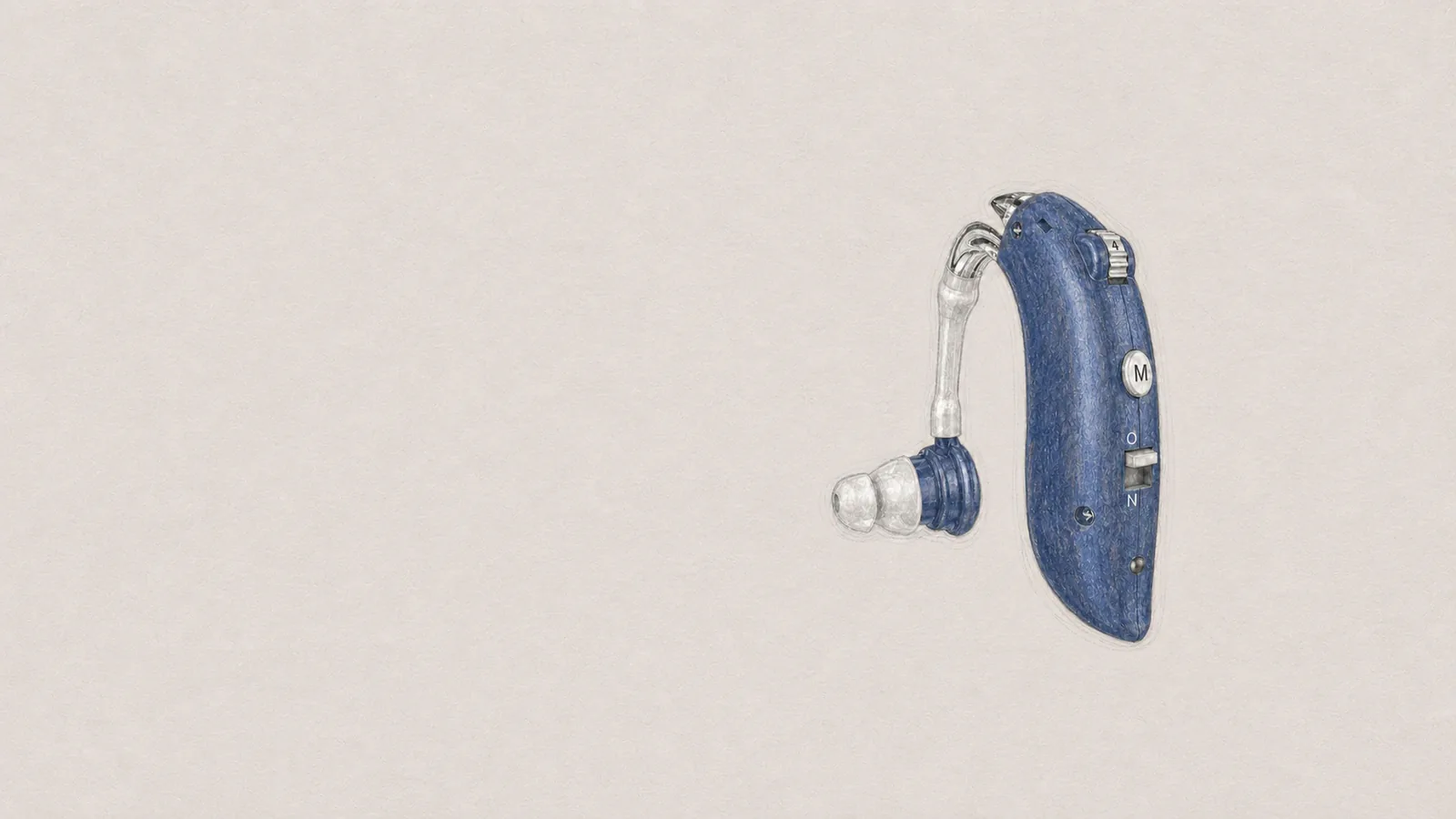
A rechargeable hearing aid spec sheet says 24 hours. Eighteen months later the wearer says it doesn't make it to dinner. Both statements are usually true, and neither party is lying. They are describing different measurements, and the gap between them is where a distributor's warranty costs live.
Runtime on a datasheet is measured on a new cell, at full rated capacity, with no streaming. Almost nothing about a real user's day matches those three conditions. This guide walks the three battery numbers you will be quoted, what each one is actually measured under, and which of them turns into a return.
The three numbers, and what each is measured under
| Number on the quote | What it's measured under | What changes in the field |
|---|---|---|
| Runtime per charge (e.g. 24 h) | New cell, 100% of rated capacity, amplification only | Streaming, capacity fade, cold weather |
| Charge cycles (e.g. 500) | Lab cycling to a defined end-of-life threshold | One cycle per day is the normal usage pattern |
| Charging case capacity (e.g. 3 extra charges) | Case fully charged, aids fully depleted | Case cell ages on the same curve as the aids |
None of these are dishonest numbers. They are just measured under laboratory conditions that a wearer never reproduces. The sourcing question isn't whether the number is real, it's what it decays to.
Streaming is not an edge case any more
Reported reduction in runtime per charge when audio is streamed, versus amplification-only use.
Source: Hearing Review — Expert Insight: how Bluetooth affects battery life
A device quoted at 24 hours can land between 12 and 17 hours once phone calls, TV audio and music are in the mix. And streaming is no longer occasional behaviour. Once a platform advertises Bluetooth, buyers use it as a headphone, which is exactly the demand the category has been selling into.
Worth pairing with the routing question: on many phones the aids grab the audio route whether or not the wearer intended it, which quietly increases streaming hours beyond what anyone chose. That behaviour, and how much of it is adjustable, is covered in the Bluetooth connectivity guide.
A cycle count is a calendar, not a budget
This is the number most often misread. A quoted cycle count reads like a large allowance to spend. It isn't. Rechargeable hearing aids are charged overnight, every night, because there is no battery door to swap. That fixes the spend rate.
Charge cycles consumed per year at the normal usage pattern of one overnight charge per day.
Source: Derived from standard daily-charge usage; 3–5 year service life is commonly quoted as 1,000–2,000 cycles
So a platform rated at 500 cycles is rated for roughly sixteen months, not "500 charges worth" of some larger budget. And cycle ratings describe the point at which a cell is considered spent, not the point at which the wearer starts noticing.
Typical remaining share of rated capacity for lithium-ion cells by the 200th cycle, after an initial faster drop over the first 100.
Source: Capacity loss characteristics of lithium-ion cells
Put those together. At one cycle per day, the 200-cycle mark arrives inside the first seven months. A device that genuinely delivered 24 hours new, and 14 hours once the wearer streams, is delivering something closer to 11 or 12 by the end of year one. Nothing has failed. The cell is behaving exactly as specified.
Why this lands as a return, not a service ticket
With a disposable-battery device, fading runtime is a consumable problem and the wearer solves it themselves for the price of a battery. With a sealed rechargeable, there is no battery door. The cell is internal, replacement means sending the unit back to the manufacturer, and for most of the price band that costs more than the device is worth.
That converts a gradual, invisible physical process into a binary outcome for the wearer: the product stopped being good enough. In a category that already runs a 15–30% return rate, against roughly 6–10% for prescription devices, adding a predictable second-year disappointment is not a small thing.
The practical asymmetry: battery fade is the one failure mode you can forecast at purchase order time. Fit problems vary by wearer. Cell chemistry doesn't.
What to ask before you commit to volume
- Ask for runtime at two states, not one. New-cell runtime and runtime at the end-of-life threshold. If only one number exists, you are being quoted the best case.
- Ask what the cycle rating's end-of-life threshold is. 80% and 70% of rated capacity are both used in the industry, and they describe very different products at the same cycle count.
- Ask for the streaming-inclusive figure. A runtime measured with a defined percentage of streaming hours is far more useful than an amplification-only maximum.
- Ask whether the cell is replaceable at service level, and at what cost. This single answer decides whether year-three is a repair or a replacement sale.
- Ask about the charging case's own cell. It ages too, and a case that no longer holds three charges converts into support tickets that look like device faults.
- Test one on a real wearing cycle before volume. Charge it nightly for a few weeks with streaming on. The datasheet cannot tell you what month eighteen feels like, but the chemistry is not a surprise.
Bottom line
- Datasheet runtime is measured new, at full capacity, without streaming. Expect 30–50% less once audio is streamed.
- A cycle rating is a calendar. At one charge per night, 500 cycles ≈ 16 months.
- Capacity is typically down to 85–80% by the 200th cycle, which arrives inside the first year.
- Sealed cells make fade terminal rather than serviceable, which is what turns it into a return instead of a consumable.
- None of this argues against rechargeable platforms. It argues for quoting them honestly and picking the ones whose second-year numbers you already know.
Source with Daerdo
Test fit and feedback on a real device — sample from a single unit.
OTC hearing-device platforms for distributors and private-label brands, built at an FDA-registered facility. Verify the return-reducers in this guide on an actual sample before you commit volume.
Sources
- Performance degradation and failure characterization of Li-ion batteries in hearing aids: insights from field data — Journal of Power Sources
- Hearing Review — What's the State of Rechargeable Batteries for Hearing Aids?
- Hearing Review — Expert Insight: battery life per charge and how Bluetooth affects it
- Capacity loss in lithium-ion cells — overview of degradation over early cycles
- hear.com — How long do rechargeable hearing aids last?
- TruHearing — Care tips for rechargeable hearing aids (sealed cell, no battery door)
- FDA — Establishing Over-the-Counter Hearing Aids (Final Rule, Federal Register 2022-17230)
- 21 CFR 800.30 — OTC hearing aid controls
- Eargo, Inc. — Form 10-K, SEC EDGAR (return-rate disclosures)