
8 min read · Distributor guide
Hearing Aid Warranties: Negotiate the Service Model, Not Just the Years
A repair costs $250–350; an entry-level OTC unit can wholesale under $10. Which side of that gap your product sits on decides what "warranty" should mean in your contract — replacement, credit notes or a real repair loop.
By Daerdo OEM Team · August 11, 2026
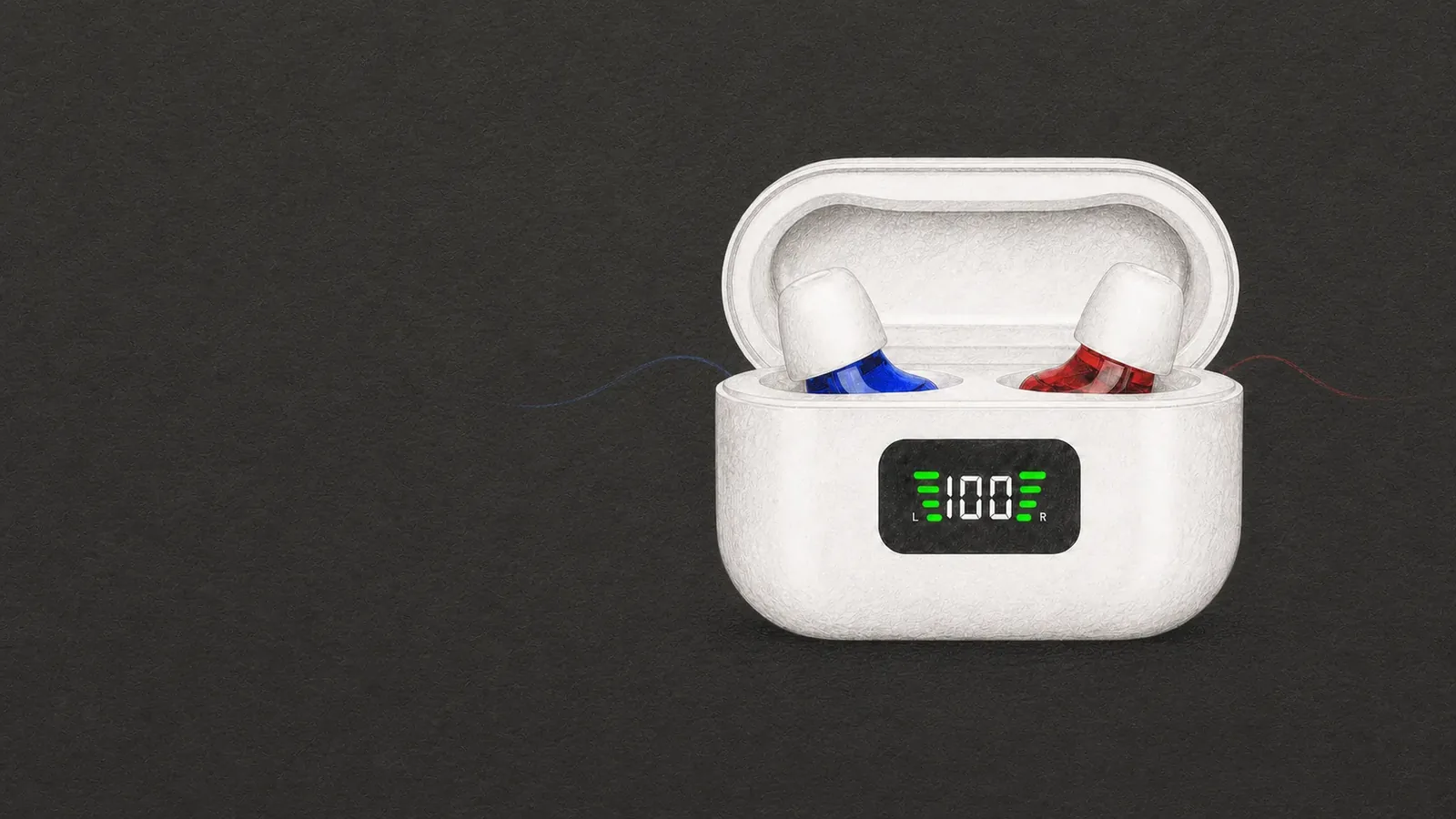
A warranty reads like an after-sales courtesy. For a distributor it is a unit-economics decision made at purchase-order time, and it hinges on two numbers that rarely appear on the same page: a professional hearing aid repair runs $250–350, and the wholesale price of an entry-level OTC device can be under ten dollars. Whether "warranty" means repair, replacement or a credit note follows directly from which side of that gap your product sits on.
This guide walks what end customers are promised, what actually comes back, and which contract clauses decide who pays for it.
The warranty umbrella your buyers grew up under
Consumer expectations are anchored by the prescription channel. Standard manufacturer warranties there run one to three years, and the strongest mass-market benchmark is Costco: a 3-year manufacturer warranty plus a 2-year loss-and-damage cover with no deductible. Notably, even Costco's own Kirkland line carried a much shorter 180-day term — length tracks price positioning, not sentiment.
| Channel | Typical warranty | Notes |
|---|---|---|
| Prescription brands | 1–3 years | Repair or replace; loss & damage often extra |
| Costco (benchmark) | 3 years + 2-year loss & damage | No-deductible L&D is the bar consumers quote |
| OTC devices | 1–2 years, often 1 | Manufacturing defects only, tips sometimes included |
| Post-repair devices | ~6 months on the repair | Industry convention for lab repairs |
The takeaway for a private-label brand: whatever warranty you print on your box is judged against that umbrella. And whatever you print must be backed, clause by clause, by what your factory actually grants you — a brand offering two years on a device the factory covers for one is personally funding year two.
What actually comes back
Published out-of-warranty repair price for one OTC hearing aid, from a maker that discloses it.
Source: Eargo published repair pricing
Most claims are not exotic electronics failures. As covered in the wax guard guide, 60–80% of hearing instrument failures trace to cerumen and moisture reaching the receiver — a maintenance outcome, not a defect. Add fit-driven dissatisfaction, the top cited return reason, and the picture is clear: the bulk of what arrives under "warranty" was preventable in the manual and the accessory bag.
That is good news, commercially: claim rates respond to product design and documentation. A clear guard-change diagram and a few spare guards in the box are warranty-cost reduction measures, not packaging niceties.
The price line where repair stops making sense
Across our own 64-model catalog, wholesale prices run from about $4 to $45 per unit. That spread is not just a range of products — it is two different service economies.
Below roughly the mid-teens, the arithmetic is unforgiving: international return freight alone can exceed the unit's value, before anyone opens it. No rational party ships a six-dollar BTE across an ocean for diagnosis. Above it — app-connected, Bluetooth, higher-power models — a repair loop starts to earn its logistics.
| Unit price band | Rational warranty model | How it is settled |
|---|---|---|
| Low (under ~$15) | Replace, never return | Spare units shipped with the order, or credit notes against the next PO; claims validated by photo or video |
| Mid | Replace locally, return in batches | Distributor holds a small service stock; defective units accumulate and travel once |
| Higher (Bluetooth / power models) | Repair loop | Units return to the factory or an authorized lab; repaired units re-warranted ~6 months |
None of this appears on a spec sheet, yet it decides your actual after-sales cost more than the warranty length printed on the box does.
Six clauses that matter more than the warranty length
- DOA window and remedy. Dead-on-arrival is a separate clause from in-warranty failure. Pin down the inspection window after receipt and whether the remedy is replacement units or credit.
- Spare-unit or credit convention. For low-price bands, ask the ratio directly: how many spare units ship per order, or what credit applies per validated claim. This is the real warranty for cheap devices.
- Freight responsibility, leg by leg. Who pays outbound replacement freight? Return freight, if physical return is required at all? Ambiguity here is where warranty costs hide.
- Photo and serial validation. Whether claims can be settled on serial number, photos and video without physical return. This single operational detail removes most of the freight from the equation.
- Repair turnaround and re-warranty. For repair-loop products: the turnaround commitment, and how long the repair itself is warranted — about six months is the industry convention.
- Pass-through alignment. Line up the consumer warranty you advertise with the factory warranty you hold, clause by clause. Every gap between the two is margin you have silently agreed to spend.
Bottom line
- Consumer expectations are set by the prescription channel: 1–3 years, with Costco's 3-year-plus-loss-and-damage as the benchmark; OTC reality is mostly 1–2 years.
- An out-of-warranty repair costs $250–350; a published example is $295 per device.
- 60–80% of what comes back traces to cerumen and moisture — claim rates are a design and documentation variable, not fate.
- Across our 64-model catalog ($4–45 wholesale), the service model flips from replace-and-credit to a genuine repair loop as unit price rises — negotiate the model, not just the duration.
- The six clauses above decide your after-sales cost. Warranty length is the headline; the clauses are the price.
Source with Daerdo
Test fit and feedback on a real device — sample from a single unit.
OTC hearing-device platforms for distributors and private-label brands, built at an FDA-registered facility. Verify the return-reducers in this guide on an actual sample before you commit volume.
Sources
- Costco — Hearing Aid FAQs (warranty and loss & damage terms)
- Soundly — Costco Hearing Aid Review (3-year warranty, 2-year L&D benchmark)
- HearingTracker — Costco hearing aids reviewed (warranty terms)
- EarPros — Kirkland Signature warranty details (180-day term)
- HearWell Lab — Hearing aid repair: costs and repair-vs-replace
- HearSource — flat-rate lab repair and 6-month repair warranty
- ELEHEAR — OTC hearing aid repair and maintenance costs
- Lexie — cost of maintaining hearing aids (OTC warranty spans)
- AAI Audiology — typical hearing aid repair cost range
- HearingAidCostGuide — warranty and protection plan cost guide
- The Hearing Review — cerumen and moisture share of hearing instrument failures