
8 min read · Distributor guide
Hearing Aid Domes and Ear Tips: The Cents-Priced Part That Decides Your Return Rate
Fit is the most-cited reason OTC hearing aids come back, and on a RIC or thin-tube device fit is a silicone dome that costs cents. Only 2 of the 64 spec sheets in our own catalog say what ships in the accessory bag. Here is what to ask instead.
By Daerdo OEM Team · August 13, 2026
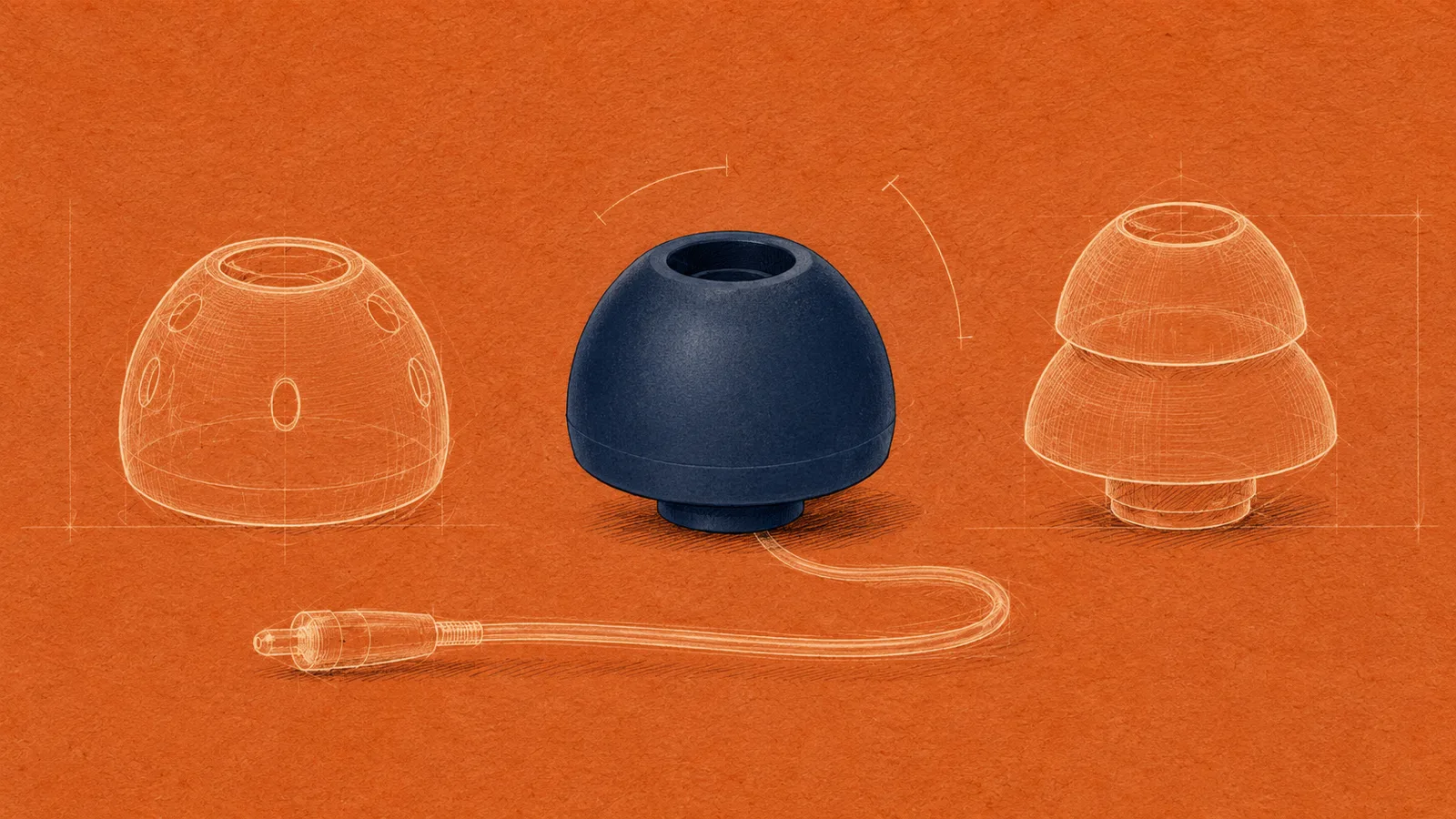
The cheapest component in a hearing aid catalog is a silicone dome that costs cents at volume. The most expensive line in a distributor's P&L is the return rate, which runs 15–30% in this category. Those two facts are directly connected: the most-cited reason OTC hearing aids come back is unsatisfactory fit, and on a RIC or slim-tube BTE, fit is decided almost entirely by that cents-worth of silicone. The part nobody puts on the spec sheet controls the number everybody fears.
This guide covers what domes and ear tips actually do acoustically, why one device with three dome options is really three different products, what almost no factory spec sheet tells you about the accessory bag, and how a few extra tips in the box work as return insurance.
Fit lives or dies at the tip
The dome is the only part of a RIC or thin-tube device that touches the ear canal. Get the size wrong in one direction and the device leaks sound — amplification escapes, feedback whistles, low frequencies vanish. Get it wrong in the other direction and the wearer gets pressure, soreness and the plugged-up sensation of hearing their own voice boom (the occlusion effect). Both failure modes arrive in the first week of ownership, which is exactly the window in which return decisions are made.
Most-cited reason for returns in Eargo's public disclosures: unsatisfactory fit — a physical problem that lives at the ear tip, not in the electronics.
Source: Eargo, Inc. — Form 10-K, SEC EDGAR
One part, three acoustic products
| Dome type | Acoustic behaviour | Typical use |
|---|---|---|
| Open (vented) | Vents relieve occlusion and let natural low-frequency sound through; more prone to feedback at higher gain | Milder loss with usable low-frequency hearing |
| Closed | Seals the canal: retains low-frequency gain and resists feedback; occlusion increases | More gain needed, speech-in-noise emphasis |
| Power / double-flange | Maximum seal for maximum stable gain; strongest occlusion | The top of an OTC device's fitting range |
| Tulip / semi-open | Petal shape gives a partial seal between open and closed | Middle ground when open leaks and closed plugs |
The commercial meaning is easy to miss: the same receiver with an open dome and a closed dome is two different listening experiences — different gain before feedback, different bass, different comfort. A device that ships with one dome type in one size has had that decision made for every end user at the factory, sight unseen. And dome sizes are measured in millimetres that are not standardised across brands — one maker's medium is another's large, which is why consumers end up hunting for brand-by-brand size charts after purchase. Every one of those searches is a fit problem trying to solve itself before it becomes a return.
The accessory bag is a returns decision — and spec sheets don't mention it
Here is the first-party observation from our own 64-model catalog: only 2 of 64 factory spec sheets document what ships in the box at all. The one that does is instructive — our G93 lists 8 ear tips per unit, plus a cleaning brush, in the standard carton. Eight tips means multiple sizes, which means the end user can self-select a seal on day one instead of living with whatever single size was fitted at the factory. That difference never appears on a one-page spec, and it is worth more to your return rate than most of what does.
- Ask what ships in the bag, by count and size. "Domes included" is not an answer. Three sizes across the device's dome types is the floor for a fit-critical product.
- Ask about the stem fitting. Domes mount on the receiver or tube stem. A standard stem accepts widely available third-party domes; a proprietary one locks your end users to a part only you can supply — which is a burden or an accessory business, depending on whether you planned for it.
- Ask about retention. A dome that stays in the canal when the device is removed is the single ugliest support call in this category. Ask how the dome locks to the stem and whether the factory has a pull-test figure.
- Ask for the material and hardness. Silicone stiffens and discolours with months of cerumen and skin oil; softer compounds seal better but tear sooner. The wear curve decides your consumables cadence.
Domes are a reorder line, not a giveaway
Domes wear. The maintenance convention is replacement every 1–3 months — faster with heavy cerumen or humid climates — for a part that costs cents. That is the same commercial shape as the wax guard covered in the wax guard guide: a consumable that protects a repair-priced component, sold in packs, reordered forever. And the two parts fail together: the tip is where 60–80% of hearing instrument failures start, as cerumen and moisture work past the first line of defence. A spares card with two dome sizes and a season of wax guards in the box is cheap insurance against the first-week return, and the template for the reorder relationship after it.
Bottom line
- Fit is the most-cited return reason in the category, and on RIC/thin-tube devices fit is decided by a silicone dome that costs cents — the part with the highest leverage-to-price ratio in the box.
- Open, closed and power domes are three acoustic products on one receiver: occlusion relief against gain retention. A single-dome SKU makes that trade-off for every customer in advance.
- Spec sheets are silent on the accessory bag (62 of 64 in our own catalog). Ask for tip counts and sizes, stem standard, retention and material — in writing.
- Domes are a 1–3 month consumable. Ship multiple sizes as fit insurance up front, then run domes and wax guards as the reorder line they naturally are.
Source with Daerdo
Test fit and feedback on a real device — sample from a single unit.
OTC hearing-device platforms for distributors and private-label brands, built at an FDA-registered facility. Verify the return-reducers in this guide on an actual sample before you commit volume.
Sources
- Hearing Review (consumer) — Open and closed fittings: feedback and occlusion
- Value Hearing Care — Hearing aid domes: types, sizes and replacement
- California Hearing Center — Replacement intervals for domes, wax guards and receivers
- Eargo, Inc. — Form 10-K, SEC EDGAR (return-reason disclosures)
- The Hearing Review — A New System to Protect Hearing Aids from Cerumen and Moisture